


Build & Migrate
Agentic Commerce
Legible to AI shopping agents.
 (opens in a new tab)
 Buying agents are early, and the preparation is not speculative: it is the same clean catalogue data, feeds and structured pricing that already pay for themselves elsewhere.

Catalogues we keep legible, ours and clients'



 Certified, not badge-only
 An agent cannot read a photograph. It reads your data, or it buys elsewhere.
How we use AIIn agentic commerce an AI assistant compares products and buys for the shopper. What it picks depends on what your catalogue says in data: attributes, identifiers, stock and price. We fix that at source, in Shopify, so every channel reads the same answer.
Our servicesFour stages, one team
How we make a Shopify catalogue legible to an agent
Nothing is rebuilt until the audit says where the gaps are.
-
Data audit
How complete and consistent the catalogue actually is, judged as a machine would read it.
-
Fix the catalogue
Attributes, identifiers and taxonomy corrected at source rather than patched per channel.
-
Feeds and markup
Structured data and feeds built and validated.
-
Monitor
Feed health and markup validity watched, because both rot quietly.
Audit
Read the catalogue the way a machine reads it: which details live only in a photograph, which identifiers are missing, where the page and the data disagree.


Bordeaux12
Catalogue rebuilt so every piece files itself
Agentic commerce agency
A catalogue that files itself
Bordeaux12 sells vintage designer pieces, each exactly once. When the store moved to Shopify we rebuilt the catalogue around designer, type and tags, so a piece listed with the right details lands in the right collections on its own.
When a piece sells, it drops out of every collection at the same moment, with nobody editing anything. That is the standard an agent needs: the data decides, and the data is never behind the shop.
What you get
What agentic commerce readiness involves
Four pieces of work in two halves: what an agent reads, and whether it can trust it.
What an agent reads
Catalogue legibility
Complete, consistent product attributes with real identifiers. An agent comparing products cannot infer what a human eye fills in from a photograph.
Structured pricing
Prices, promotions and per-market variations expressed in markup rather than only in a rendered page.
Whether it can trust it
Feeds and availability
Accurate, current feeds with stock and price that reflect reality, because an agent that transacts on stale data creates a refund and a complaint.
No wasted preparation
Everything here also improves Google Shopping, AI search citation and on-site search. This is not a bet on a timeline.
Fix
Attributes, identifiers, taxonomy, markup and feeds corrected at source in Shopify, so every channel reads the same answer.
Agentic commerce
Markup that says what the page says
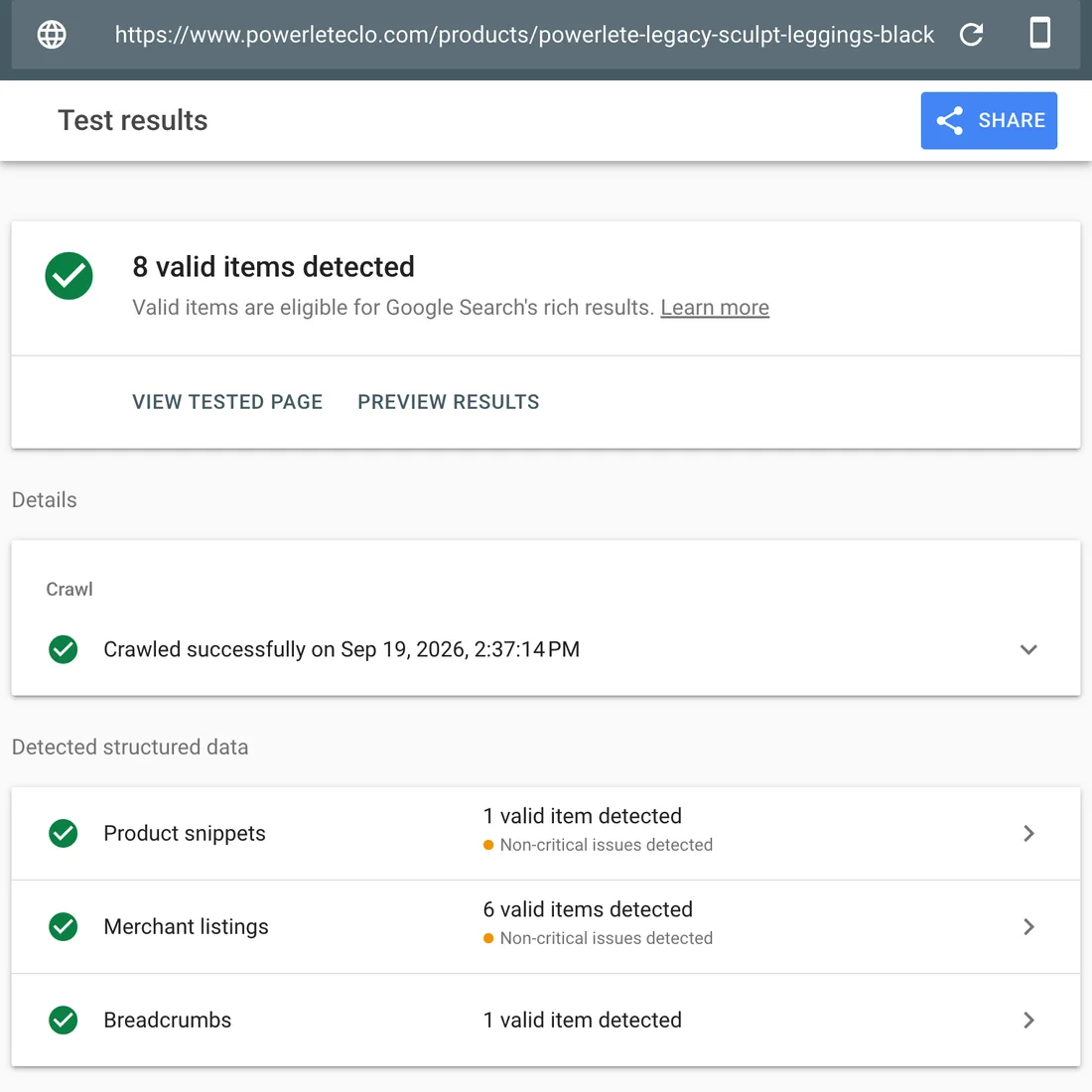
An agent leans on structured data far more than a shopper does. Product, price and availability markup has to validate, and it has to agree with the page it sits on.
We test it on live pages, fix it in the theme rather than with an app, and check it again after every release. This is Google's Rich Results Test on one of our own Powerlete product pages.


Agentic commerce readiness
Feeds that match the shop, in every market
Bessette sells curated luxury fashion into several markets. We set up their Google Merchant Center and built advanced product feeds for Merchant Center and Facebook, localised for each market they trade in.
A feed is the first thing a machine reads about a store. When its price or stock disagrees with the checkout, an agent either passes you over or buys on a promise you cannot keep.
Built for people vs built for agents
Why AI shopping agents pass over most catalogues
Most catalogues were built for a person with a photograph in front of them. An agent comparing products cannot fill in what the picture shows.
| Question | Built for people | Legible to an agent |
|---|---|---|
| Product details | In the photo and the description | In complete, consistent attributes |
| Identifiers | Missing or uneven across variants | Real identifiers on every variant |
| Stock and price | Right on the page, stale in the feed | Accurate everywhere, as it changes |
| Promotions and market prices | Shown in a banner | Expressed in markup |
| Where it gets fixed | Patched per channel | At source, in Shopify |
Keep it true
Prices move, stock sells out, a theme update drops a field. Feed health and markup validity are watched, because both rot quietly.

Fittr Nutrition
Our own brand, subscriptions on Loop from day one
Structured pricing
Two prices, and an agent that can tell them apart
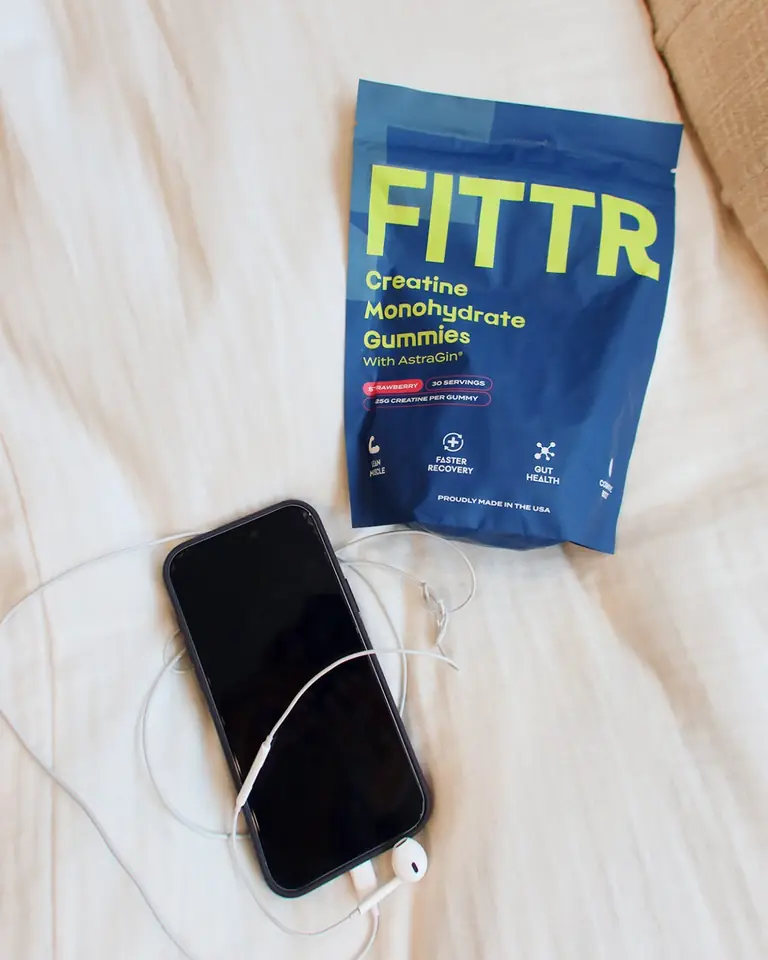
Fittr Nutrition is our supplements brand. It has sold both one-off and on subscription, through Loop, since its first day trading.
An agent comparing prices has to know which is which. It can only do that when the plan lives in the store’s data rather than in a banner, and it stays right only if someone checks it every time the offer changes.
Reviews on the Shopify Partner Directory
Merchants, in their own words.
-
From start to finish, they were incredibly easy to work with. They understood the brief perfectly and delivered to a very high standard. Communication was excellent throughout, with quick and clear responses to any questions I had.
Tacky And Upsetting Store build or redesign · April 2026
-
The things [the team] have put in place and recommended for us have paid immediate dividend. We wish we had come in contact with [them] sooner.
ARTMARTIAL Store build or redesign · April 2026
-
I can’t recommend [the team] enough, [they] helped us with everything from product design, supplier communication to website building and SEO. We were able to build a brand off the back of all [their] information and help.
Reveliér Studios Business strategy guidance · April 2026
How we work with you
The audit on its own
How complete and consistent your catalogue is, judged as a machine would read it, with the fixes ranked by what they unlock.
Short engagementFix and build
Attributes, identifiers and taxonomy corrected at source, then structured data and feeds built and validated.
Fixed scopeMonitoring
Feed health and markup validity watched after launch, and fixed when a price change or a theme update breaks them.
OngoingIs this the right thing to buy from us?
Worth a conversation
- Your product details live mostly in photos and descriptions
- Prices or stock in your feeds drift from the store
- You sell in more than one market, or run promotions often
- You want Shopping and AI search working harder anyway
Probably not this, yet
- You want a chatbot on the store, which is a different job
- The catalogue is a handful of products that rarely change
- You want a date for when agents buy at scale
Agentic commerce agency
Where this fits
Agentic commerce sits one step past two services we already run. Ecommerce AI SEO gets a store quoted when a shopper asks an assistant a question, and GEO works on whether the brand is recommended at all. This is what happens next: the agent goes to compare, check stock and buy, and it acts on whatever your data says.
Most of the work is not new. It is catalogue hygiene that already pays in Google Shopping, on-site search and AI citation, done to a standard a machine can rely on. That is why, as an agentic commerce agency, we sell it on what it fixes today rather than on a forecast.
Keep reading
Everything around AI in ecommerce
The brands behind the stores we build and run.







Partners
Tools we have already run on our own stores
The apps around a Shopify store decide as much as the theme does, and choosing between thousands of them is most of the work. We are a Shopify Plus Partner and we integrate the tools that sit around the platform. Every one of them runs on our own two stores before it reaches a client, so the recommendation you get comes from having paid for the thing and lived with it. When a brand already runs a stack that works, we integrate with it rather than rebuilding it to suit us.
How we use them



Straight answers
What is agentic commerce?
Shopping done by an AI assistant on somebody’s behalf: it researches, compares and, within limits the shopper sets, buys. It reads your product data rather than looking at your page, so what it knows about a product is what your catalogue says in data.
What if AI agents never take off?
Then nothing is wasted. Complete attributes, accurate feeds and structured pricing also improve Google Shopping, AI search citation and on-site search. We do not sell this as a bet on a timeline.
Do we need a new platform or a headless build?
No. The work happens in the Shopify store you already run: the attributes, identifiers, taxonomy and markup it already outputs, made complete and consistent. Headless changes how a store is rendered, not whether its data is right.
How is this different from AI SEO?
AI SEO is about being quoted in an answer. Agentic commerce readiness is about being usable when an agent acts: the stock, price and identifiers it transacts on have to be true. The catalogue underneath is the same, which is why the two are often done together.
What do you need from us to start?
Access to the store, and to your Merchant Center or Meta catalogue if you run them. The audit reads the catalogue as a machine would and comes back with the fixes ranked.
Tell us what your catalogue looks like
Send the store and how many products it carries. We will say where an agent would get stuck first.
Stores we build and grow










Start a conversation
Talk to the people who would do the work.
Book a call or send a note. We will come back with what an agent would read on your store today, what it would miss, and which fixes pay off whether agents arrive or not.
Get in touch